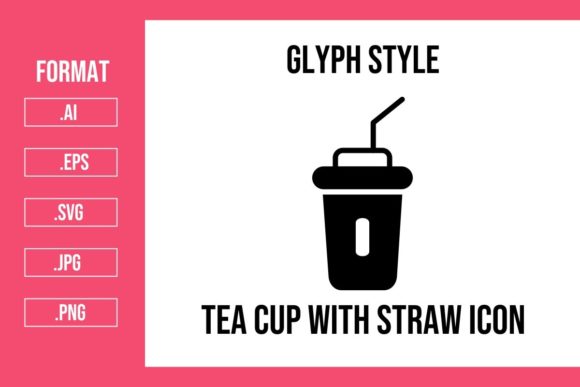
Real Seller Review: The Tea Cup with Straw Icon for Graphics & Merchandise
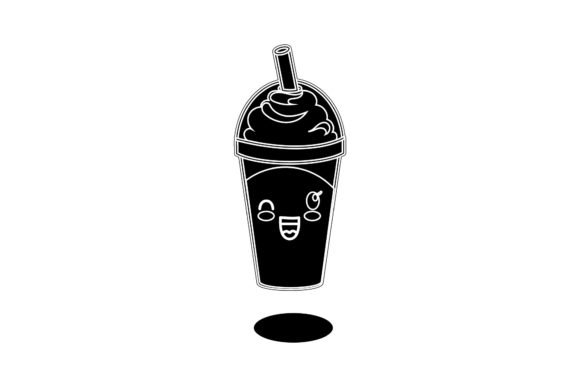
When you're prepping a new collection for your Etsy shop or Creative Fabrica store, you start hunting for assets that feel both versatile and commercially sound. The Tea Cup with Straw Glyph Icon is one of those graphics you immediately slot into a 'test' folder. It's not just a clipart; it's a potential design anchor for a range of products. My first impression was that it leans into a modern, slightly playful aesthetic. It feels clean and graphic, suitable for a cafe brand, a lifestyle blog, or a summery product line. The straw adds a touch of casual, everyday charm that could attract buyers looking for relatable, decorative elements rather than overly ornate illustrations.
Niche Appeal and Commercial Personality
The style of this icon sits in a useful middle ground. It's not overly feminine or rustic, nor is it starkly minimal. This gives it a commercial flexibility. I'd pair it with a sans-serif font for a modern look, or a friendly script font to tilt it towards 'cute' for planner stickers or nursery prints. Its visual personality is decorative without being childish, which opens doors for small business branding—think a local tea shop's social media graphics or a food blogger's packaging design. For sellers targeting crafters, Cricut users, or print-on-demand customers, this kind of straightforward, scalable graphic is often exactly what they need for a clean-cut project.
Testing Across Real Product-Selling Situations
Before committing to a full product line, I always test a new graphic asset across several mockup scenarios. Here's how I'd evaluate the Tea Cup with Straw Glyph Icon.
Core Applications for Digital Downloads
Given the file formats—vector AI and EPS, scalable SVG, and raster JPG and PNG—this icon is built for adaptation. The SVG design is crucial for Cricut projects like sticker sheets or t-shirt graphics, where clean cutting lines are essential. The high-resolution PNG with transparency is perfect for dropping into Canva templates for invitations or blog graphics. I'd immediately test it as a central element in a printable wall art piece, perhaps paired with a simple quote. For a digital product bundle, it could anchor a set of sublimation designs for tumblers or tote bags.
Expanding into Merchandise and Templates
This is where you gauge real commercial value. Can this single icon help build a coherent collection? I'd create a mockup for a mug design, using the icon as a focal point. I'd test it on a dark background for a premium look, and on a white background for a more everyday product mockup. For a seasonal bundle—perhaps a 'Summer Drinks' collection—this tea cup icon could be combined with other beverage graphics. Its strength in product presentation lies in its simplicity; it won't overwhelm a thumbnail image, aiding click-through potential on marketplace listings.
Professional Product Presentation & Potential Risks
A good graphic design asset should elevate your listing's perceived value. The Tea Cup with Straw Glyph Icon, when used correctly, can contribute to a professional-looking online shop.
Where This Asset Works Best
- Large Product Previews: In mockups for mugs or art prints, it scales well and maintains clarity.
- Themed Bundles: As part of a 'Coffee & Tea' clipart pack or digital paper pack.
- Decorative Layouts: In greeting card templates or planner dashboards, it serves as a charming accent.
- Social Media Promos: For promoting your digital download shop or a new print-on-demand product line.
- Brand Consistency: If you're building a brand around food or hospitality, this icon can become a recognizable visual element.
Where to Use It Carefully
- Tiny Sticker Details: If reduced too much, the straw detail might become faint. Always test the SVG cut lines for small-scale Cricut projects.
- Overly Complex Layouts: It’s a simple graphic. Avoid crowding it with too many other elements in a template.
- Low-Resolution Print Products: Ensure you’re using the vector files for any large format printing to avoid pixelation.
- Crowded Thumbnails: On Etsy or Shopify, use it with ample negative space so it stands out.
- Weak Contrast Backgrounds: Test the PNG on various backgrounds to ensure the icon retains good visual hierarchy.
Practical Seller Notes Before You List
Here’s the real-world checklist I'd run through before publishing any product featuring this icon.
- Mockup Test: Place the PNG into at least three different product mockups (e.g., a t-shirt, a mug, a wall art frame). Does it look integrated or awkward?
- Thumbnail Preview: Simulate your marketplace listing thumbnail. Does the Tea Cup with Straw Glyph Icon capture attention at a small size?
- Background Check: Preview it on pure white and a dark charcoal background. Does it work in both contexts?
- Print Test: If selling physical products, print a sample, even on plain paper, to check color rendition.
- Transparency & Scalability: Verify the PNG transparency is clean and the SVG opens without errors in your design software.
- File Organization: If you’re bundling it, organize the .AI, .EPS, .SVG, .JPG, .PNG files clearly for your customers. Label them.
- Font Pairing Test: Try pairing the icon with a serif font (for elegance), a bold sans-serif (for modern commercial use), and a handwritten font (for crafty projects). See what feels most sellable.
- License Confirmation: Absolutely confirm the commercial license terms before selling any finished product, template, or bundle that includes this asset.
The Final Verdict for Your Online Shop
The Tea Cup with Straw Glyph Icon is a practical, business-minded graphic. It won’t single-handedly build your brand, but it’s a reliable, versatile component. For digital product creators selling on Etsy, print-on-demand platforms, or creative marketplaces, it’s worth the test phase. It can help you quickly assemble a themed collection, improve your listing images with clean mockups, and offer customers a usable design asset for their own projects. Its true value is unlocked when you thoughtfully integrate it into your products, always keeping the end-buyer’s needs—whether they’re a crafter, a small business owner, or a fellow designer—in clear focus.